Material Intelligence for A&D Teams
Search by what
the surface needs.
Not by keyword.
40,000+ tiles. DCOF, fire rating, lead time, regional availability — indexed from source. Your spec sets, right the first time.
Mosa Terra
0.55 · A · 24×24
Crossville Virtue
0.38 · A · 12×24
Daltile Perpetuo
0.48 · B · 24×24
Emser Brera
0.52 · A · 24×24
Florida Native
0.44 · A · 12×12
Atlas Concorde
0.61 · A · 24×24
Marazzi Color
0.35 · C · 12×24
Mosa Solids
0.50 · A · 12×12
Crossville Ebb
0.46 · A · 24×24
9 of 9 qualify
The Problem
Your team spends more time hunting for product data than designing with it.
01 — Fragmented Catalogs
Product data lives across dozens of manufacturer sites, sample binders, and outdated PDFs. Finding what actually meets the spec takes hours — and you still might miss something.
02 — Manual Takeoffs
Spec coordinators copy-paste product codes between Revit schedules, spreadsheets, and submittals. Every handoff introduces error. Every revision restarts the cycle.
03 — Opaque Lead Times
By the time a rep confirms availability, the project timeline has moved. Lead time surprises in CD mean late substitutions, VE battles, and redesign.
How It Works
From brief to
spec sheet.
01 — Search
Describe the constraint, not the product.
Tell Matcha what the surface needs — slip resistance for a hotel lobby, fire rating for a corridor, large format for a feature wall — and get back tiles that actually qualify. Not keyword results. Constraint results.
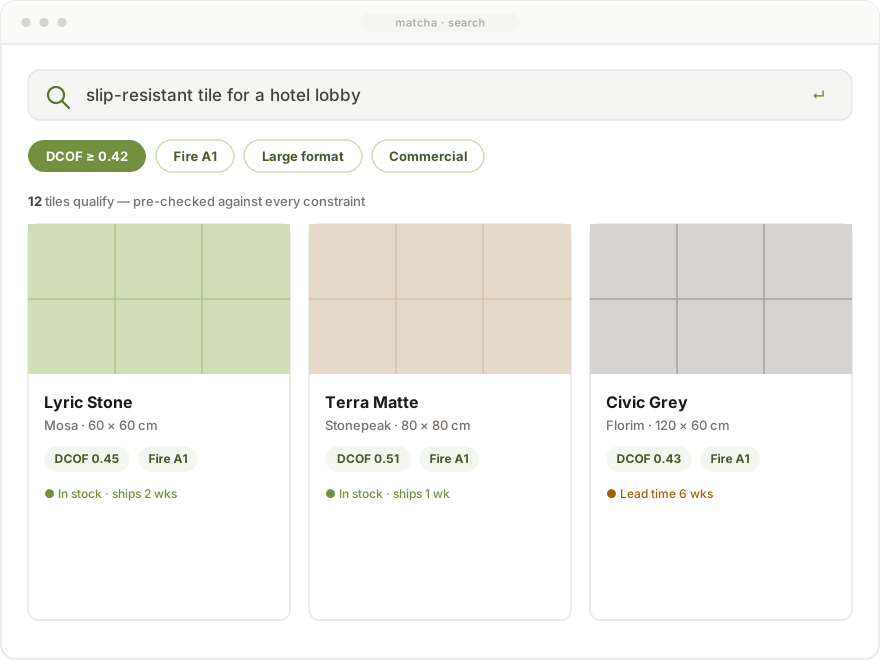
Illustrative interface — representative of the product experience.
02 — Organize
One project. Every surface. All constraints tracked.
Pin selections to surfaces within your project hierarchy. Lobby, corridor, restroom — each with its own requirements. No more spreadsheets, no more binder tabs, no more 'which version is current?' emails.
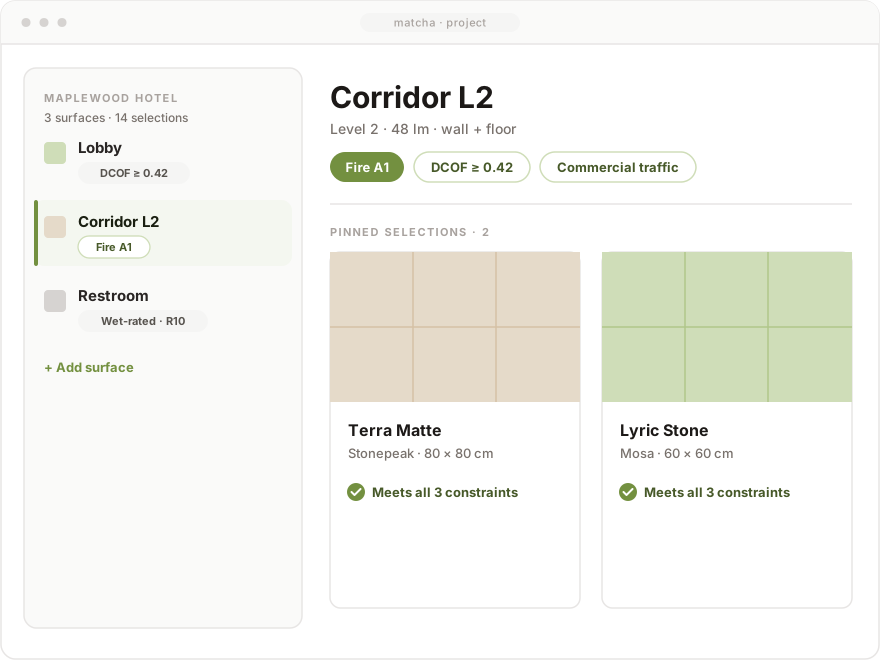
Illustrative interface — representative of the product experience.
03 — Specify
Export spec sets that are already validated.
Shortlists come with complete product data: manufacturer, dimensions, finish, DCOF, fire class, and availability. Pre-checked against every constraint on the surface. Your submittals arrive clean.
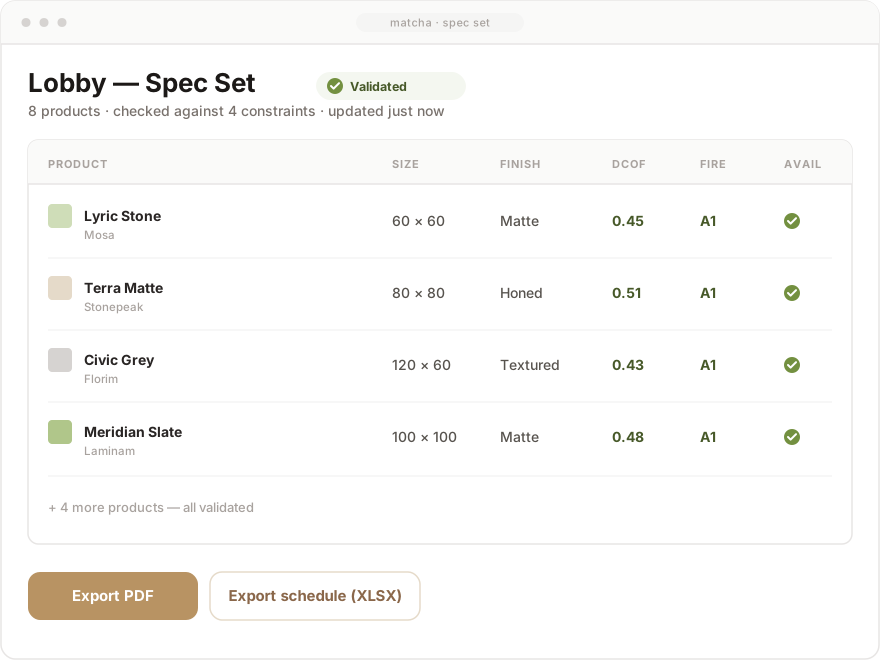
Illustrative interface — representative of the product experience.
The Catalog
Real product data.
Not marketing copy.
Matcha indexes technical specifications directly from manufacturer sources — dimensions, DCOF, fire ratings, MOQ, lead times. Every field structured, every value searchable.
40,247
products indexed
Ceramic, porcelain, natural stone
19
manufacturers
North American + European sources
1.4s
avg. constraint search
Embedding + vector retrieval
Manufacturers we’re working with
FAQ
Common
questions.
Ceramic, porcelain, and natural stone tiles from 127 manufacturers — with LVT, terrazzo, and other finished surfaces coming in 2026. Every product is indexed with technical data: dimensions, DCOF, fire rating, thickness, and finish.
Manufacturer sites show their own products. Matcha searches across every indexed manufacturer simultaneously, filtered by the technical constraints your surface actually requires. Most catalog sites don't even expose DCOF in search.
Not yet. The current focus is specification research and selection — the workflow that happens before the Revit schedule gets built. BIM integration is on the 2026 roadmap. The consultation call is a good place to discuss your team's toolchain.
A&D teams at commercial architecture and interior design firms. If your team specifies tile and finished products for hospitality, healthcare, corporate, or multifamily projects, Matcha is built for how you already work.
A 30-minute walkthrough mapped to your current specification workflow. We look at your typical project type, walk through constraint-aware search on a real brief, and identify where Matcha saves the most time.
See how Matcha fits
your specification workflow.
30 minutes. We map Matcha to your current process, walk through constraint-aware search on a real project, and show you what changes.
No commitment — no sales deck